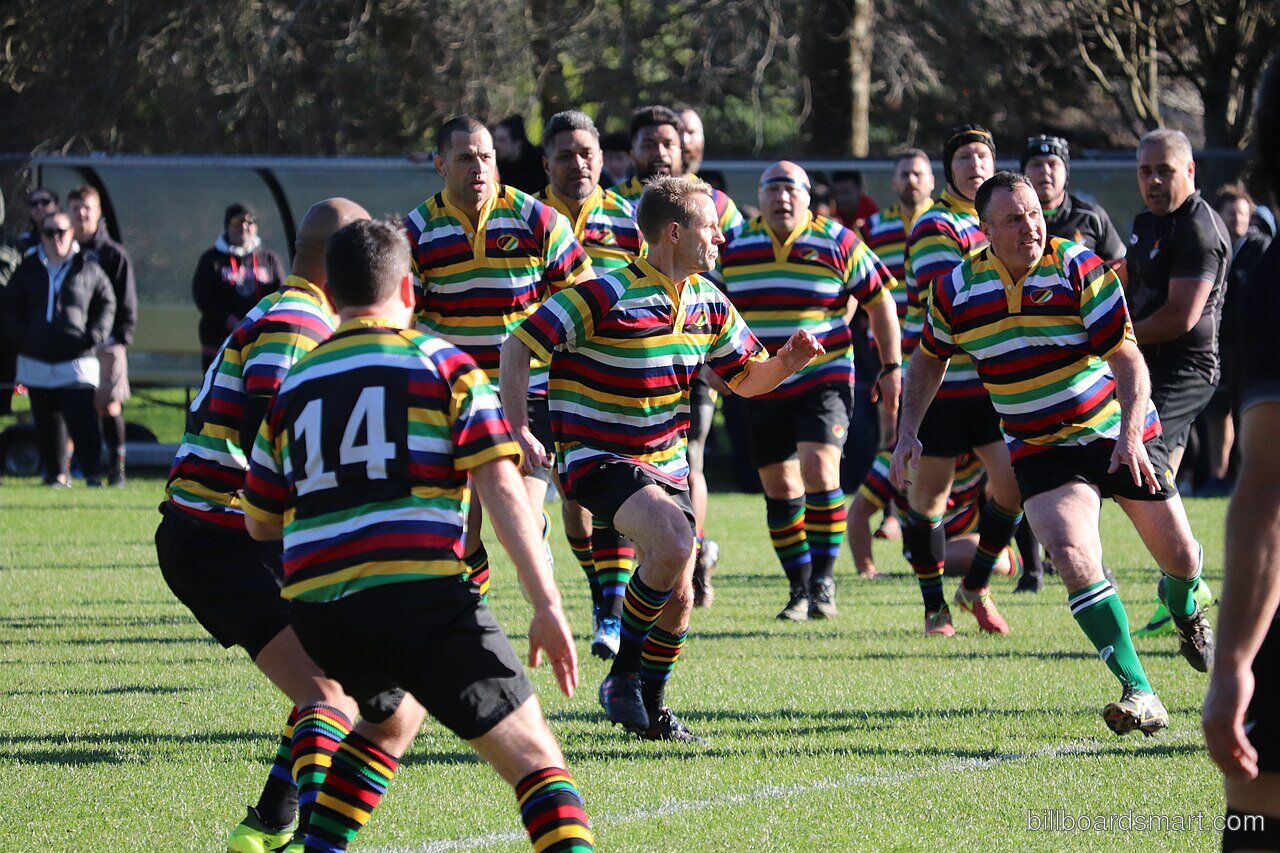
Rugby has a problem that most people in the sport can see but few want to talk about. Players get hurt, they get dropped, they lose form, they retire, and they are expected to carry all of it without complaining. The changing room has always rewarded toughness, and toughness has always been measured by how little you say. Looseheadz started with a simple idea: what if a rugby shirt could start the conversation instead of shutting it down?
The brand was founded in 2017 by three friends, Dave, Mark and Rob, who had played rugby for decades between them and had seen first-hand what poor mental health can do to people in and around the game. It began as a small project at Wilmslow Rugby Club in Cheshire, raising money to help friends who were struggling. From there it grew into something bigger: a rugby clothing brand whose sales fund mental health work across the sport, and a charity with the goal of placing a trained mental health lead, known as a Loosehead, into every rugby club in the world.
That goal sounds ambitious, and it is. But it is also specific, which is what makes it worth taking seriously. This is not a brand that donates a vague share of profits to a vague cause. It is a brand built around one mission, with the clothing as the way to pay for it. This guide explains what Looseheadz sells, where the money goes, and how to buy from a cause-led brand without getting it wrong.
What the brand stands for
The name is a rugby joke with a serious point. A loosehead prop is the front-row forward on the left of the scrum, the one who takes the pressure and holds the set piece together. A Loosehead, in this brand's language, is a mental health lead inside a rugby club: someone players know they can talk to, someone who has been given training and resources, and someone who can point people toward proper help when they need it. The pun is doing real work here. It takes a word every rugby person already knows and turns it into a role every club could use.
The campaign runs under the hashtag TackleTheStigma, and the stigma in question is the idea that talking about mental health is a weakness, particularly in a sport that prizes physical toughness. Rugby's culture makes this harder than in most sports. Players are taught to play through pain, to keep their heads down, and to sort things out themselves. That attitude wins matches and ruins lives, sometimes in the same season. Looseheadz argues that asking for help is not the opposite of toughness. It is a different kind of toughness, and it is one the sport needs to learn.
The work is organised through the LooseHeadz Foundation, a registered charity in England and Wales. The foundation is run separately from the clothing business, with its own board of trustees, so the money raised is handled independently and can be accounted for properly. Its patron is Shaun Edwards, one of the most respected coaches in the game, which tells you something about how seriously the rugby world takes the project. This is not a celebrity endorsement deal. It is a coach putting his name behind a cause inside his own sport.
The foundation's work is practical rather than abstract. It provides clubs with a free toolkit of mental health resources, it trains mental health leads, and it funds initiatives that support players, coaches, and supporters at every level of the game, from grassroots clubs to the professional ranks. Clubs sign up to the programme, and the aim is to make support available where players already spend their time, in the clubhouse and on the training pitch, rather than expecting them to go looking for it elsewhere. By the brand's own count, more than a thousand clubs across dozens of countries have signed up, which gives a sense of how far a small project from a Cheshire clubhouse has travelled.
What Looseheadz sells
The clothing is rugby leisurewear, designed by rugby players for rugby players, and the range is broader than it first looks. T-shirts are the starting point, many of them carrying the brand's H logo, which is drawn to look like a pair of goalposts, or a short message about mental health. Hoodies are the best sellers for colder months, and they are the kind of thing that gets worn to training, to the gym, and around the house. Rugby shirts, in the classic style with a collar, sit alongside quarter-zip tops, vests, shorts, and socks for training and match days.
Headwear is a bigger part of the range than you might expect. Bobble hats with the H logo have become one of the brand's most recognisable items, partly because a hat is visible from a distance and partly because it is easy to wear. A beanie does not need a size chart, it does not clash with an outfit, and it works as a small, visible signal that the person wearing it supports the cause. The range also includes caps, scrunchies, and other accessories, which make the brand accessible to people who do not want a full rugby shirt but still want to support it.
Sizing is worth a mention, because the brand stocks many of its lines in men's and women's fits, and in sizes up to 4XL. Rugby is not a sport of one body shape, and a brand that sells to rugby players has to dress props as well as wingers. If you are between sizes, check the size guide on the product page before ordering, and think about how you want the item to fit. A training top that is meant to be worn over a base layer needs more room than a T-shirt worn on its own. A hoodie that is meant to be lived in can be a size up. Getting the size right first time saves a return, and a return costs the charity money in postage and handling, which is a practical reason to measure twice.
The designs themselves are deliberately simple. The H logo, the goalposts, the short messages. There is no complicated artwork, no fashion-forward styling, no attempt to look like a high-street brand. That is a choice, and it fits the mission. The clothes are designed to get people talking, and a simple, readable design does that better than a clever one. Someone asks what the H means, and the conversation starts. That is the product working as intended.
Where the money goes, and how to shop with your eyes open
The brand states that 100 percent of the profits from every purchase go toward improving the mental wellbeing of people in rugby. That is a strong claim, and it is worth understanding what it means. Profits are what is left after the costs of making and selling the clothes, so the amount that reaches the foundation depends on how efficiently the business is run. The separation between the clothing company and the foundation, with its own trustees, is the structure that makes the claim checkable, and it is the right thing to look for in any cause-led brand. A charity number, a separate board, and published accounts are the signs that a promise is real rather than a slogan.
That said, buying a hoodie is not the same as making a donation, and it is worth being honest about that. When you buy from Looseheadz, you are buying a piece of clothing, and the profit from that sale funds the foundation's work. If your main goal is to give money, a direct donation to the foundation will put more of your money to work than a purchase will, because the cost of the garment does not come out of it. If your main goal is to own a rugby top and support a cause at the same time, the clothing is the right choice. Both are legitimate. They are just different things.
When you shop, buy from the brand's own store rather than a third-party listing. The brand sells through its own website, and buying direct means the money goes through the right channel and the item is genuine. Check the product page for the size guide, the fabric, and the care instructions. Rugby leisurewear is made to be worn hard and washed often, so check whether the item can go in a normal wash and whether the print will survive it. A shirt that fades after three washes is a poor advert for the cause it supports.
Finally, think about who you are buying for. A Looseheadz top makes a good gift for a rugby player, a coach, a referee, or anyone who spends their weekends at a club. It also makes a good gift for someone who has been through a hard time and come out the other side, though that is a gift that needs a gentle touch and a personal note rather than a grand gesture. The best thing about the brand is that the gift carries its meaning on its face. You do not have to explain why you chose it. The shirt does that for you, and the conversation it starts might be the most valuable part of the whole purchase.