Where do you go when you want cheese that is more than just a block from a supermarket shelf? If you are in London, one name comes up again and again: Paxton and Whitfield. It is one of the oldest cheesemongers in England, with a small black-and-gold shop on Jermyn Street that has been selling cheese since the nineteenth century, and a reputation that has earned it a royal warrant. This guide explains what the shop is, what it sells, and how to get the best out of a visit, whether you are buying a single piece for dinner or putting together a cheese board for a party.
Paxton and Whitfield traces its roots to a cheese stall at Clare Market, near Aldwych, in 1742, and the business itself was founded in 1797. The shop moved to Jermyn Street in the 1830s, and to its current home at 93 Jermyn Street in the 1890s, where it has been ever since. That kind of history matters in cheese, because a cheesemonger is not just a shopkeeper. The good ones buy young cheese, mature it in their own cellars until it is ready, and know exactly when each piece is at its best. Paxton and Whitfield matures cheese in its own cellars and in maturation rooms in the Cotswolds, and that care is a large part of what you are paying for.
The business holds a royal warrant as cheesemonger to the royal household, a relationship that goes back to Queen Victoria in 1850, and it currently holds a warrant from King Charles III. A royal warrant is not a guarantee that you will like every cheese, but it is a sign that the shop has supplied the royal household over a long period, and it tells you something about the standard it is expected to keep.
What the shops sell
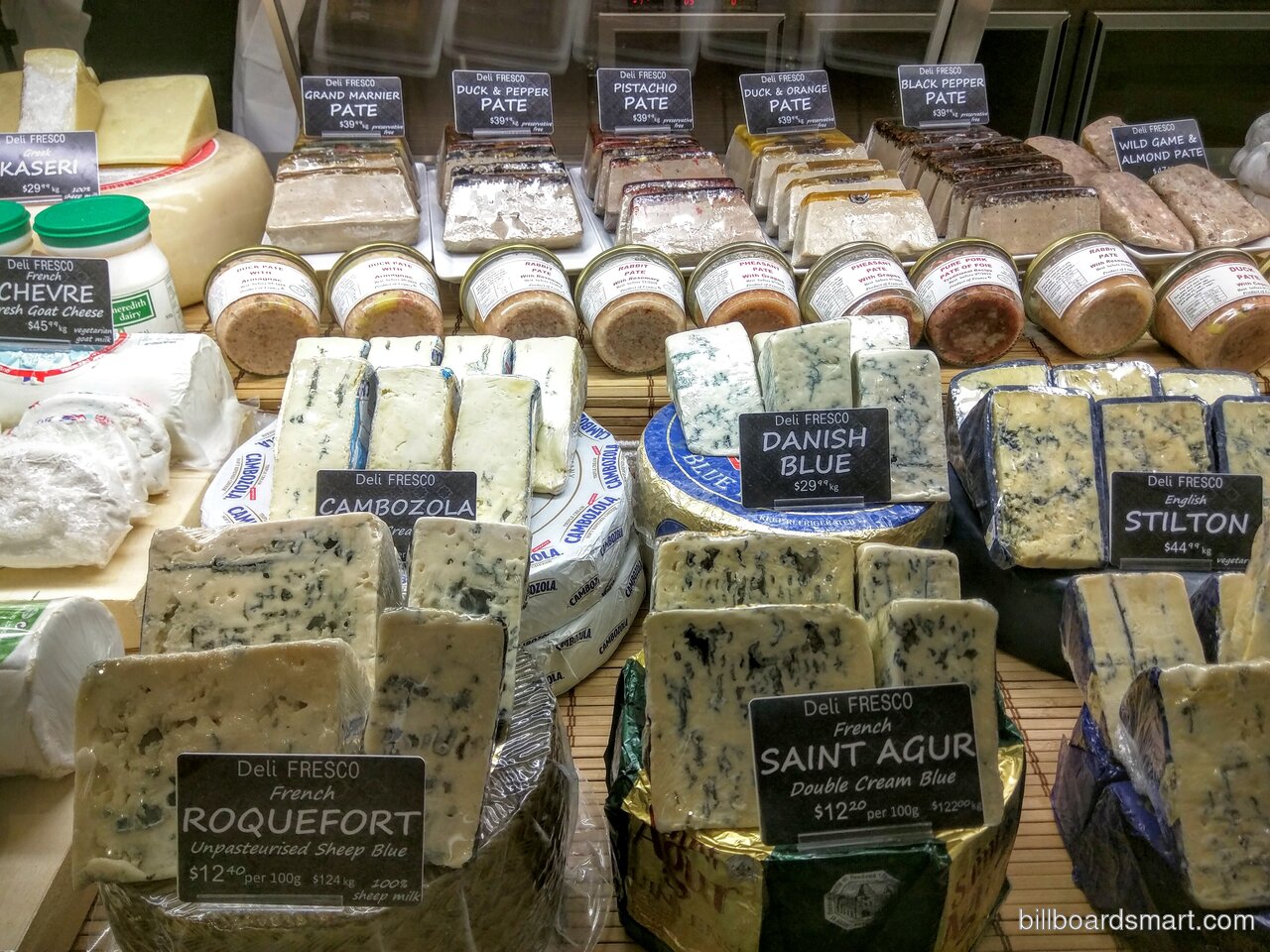
The heart of Paxton and Whitfield is British and continental cheese, sold by weight and cut to order. The counter is the place to start. You will find soft, bloomy cheeses, washed-rind cheeses, hard and clothbound cheeses, blues, and goats' cheeses, from small farmhouse producers as well as from larger, well-known makers. The staff are cheesemongers, not just sales assistants, and asking them what is tasting well that week is usually the fastest way to find something good.
Some names to look out for give a sense of the range. Baron Bigod is a soft, bloomy cows' milk cheese from Suffolk with a rich, mushroomy rind and a soft centre. Stichelton is a raw-milk blue in the Stilton style, made with traditional methods. Sparkenhoe Red Leicester, in its aged XO form, is a firm, crystalline cheese with a deep, nutty flavour that is very different from the mild supermarket version of the same name. Little Rollright is a soft, washed cheese with a peachy rind and a silky middle. Corra Linn is a hard, Gouda-style cheese from Scotland. You do not need to remember any of these names. The point is that the shop sells cheeses with a real sense of place and a real maker behind them, and the staff can tell you about each one.
Beyond the counter, the shops sell cheese gifts, hampers, and subscriptions, as well as accompaniments such as crackers, chutneys, and honey, and cheese-related homeware. A hamper makes a straightforward gift for someone who likes food, because it arrives ready to eat and does not need you to know exactly what they like. A subscription is a better choice for yourself if you enjoy trying new cheeses, because it brings a different selection to your door on a regular basis and takes the decision out of your hands.
The shop also sells online, with delivery across the UK, and some of its cheeses are available through premium supermarkets and grocery services. The full range, though, is in the shops themselves, and the cheeses that are matured and cut to order are the ones worth travelling for.
The shops, and what a visit is like
The flagship shop is at 93 Jermyn Street in St James's, London, with its distinctive black-and-gold frontage and a window that is hard to walk past without stopping. There are further shops in Chelsea, on Cale Street, and in Bath and Canterbury. Each one is a proper cheese shop, not a deli counter tucked into a larger store, and the atmosphere is part of the experience: the smell of the counter, the sight of whole wheels and truckles, and the chance to taste before you buy.
Tasting is the most useful thing you can do in a cheese shop, and Paxton and Whitfield's staff expect it. If you are unsure about a cheese, ask for a taste. A small piece will tell you more than any description. Pay attention to the texture as well as the flavour. A soft cheese should be yielding but not runny unless it is meant to be. A hard cheese should be firm and a little crumbly, not dry and dull. A blue should be creamy and salty, not sharp and bitter. If you do not like something, say so. The staff would rather sell you a cheese you enjoy than one you leave in the fridge.
It helps to go in with a plan, even a loose one. Are you buying cheese for a sandwich, for cooking, for a cheese board, or as a gift? Each one points to a different choice. A cheese for cooking needs to melt well and hold its flavour when heated. A cheese for a board needs to look good, cut well, and sit alongside other flavours without overpowering them. Tell the staff what you are planning, how many people you are feeding, and what else you are serving, and they can build a selection around it.
How to buy well, and how to keep cheese at home
Buy less than you think you need, and buy it more often. Cheese is a fresh food, and it is at its best for a short window after it is cut. A small piece of excellent cheese eaten at its peak is better than a large piece that sits in the fridge for two weeks and dries out. If you are building a cheese board, three cheeses are usually enough: one soft, one hard, and one blue or goats' cheese. Five cheeses can work for a larger group, but more than that and the flavours start to blur together.
Ask the staff to wrap each cheese separately, and keep them separate at home. Strong cheeses will pass their flavour to milder ones if they are stored together, and soft cheeses can pick up smells from the fridge. Wrap cheese in waxed paper or cheese paper if you have it, then put it in a container or a bag. Cling film is not ideal, because cheese needs to breathe a little, but it is better than leaving a piece unwrapped to dry out.
Take cheese out of the fridge at least half an hour before you serve it, and an hour is better for larger pieces. Cold cheese tastes muted, and the texture feels firmer than it should. At room temperature, the flavours open up and the texture softens, and the difference is easy to taste. Cut hard cheese into pieces that are easy to pick up, and serve soft cheese with a knife that can spread it.
On price, Paxton and Whitfield is not a budget shop, and it does not try to be. The cheeses are priced for the quality of the milk, the making, and the maturing, and you will pay more per hundred grams than you would in a supermarket. The way to get value is to buy small amounts of the best cheese, eat it at its peak, and treat it as the centre of the meal rather than an afterthought. A piece of well-matured cheddar with good bread and a glass of something you like is a complete supper, and it costs less than a mediocre takeaway.
If you are buying online, check the delivery terms and the packaging. Cheese needs to arrive cool and in good condition, and a good online cheese shop will pack it accordingly. Order early if you need it for a particular date, and check the cheese as soon as it arrives. If anything looks wrong, contact the shop straight away with a photo, rather than leaving it and hoping it improves.
Paxton and Whitfield has survived for more than two centuries because it does one thing well: it buys good cheese, matures it carefully, and sells it with advice. You do not need to know anything about cheese to shop there. You only need to know what you like, or to be willing to taste and find out. Walk in, ask what is tasting well, buy a little, and eat it at room temperature. That is the whole secret, and it has worked since 1797.