How long should a pair of work boots last? If you ask that question on a job site, you will get a different answer from almost everyone there. Some people burn through a cheap pair in six months. Others still wear the same boots years later, resoled once or twice, the leather scuffed but holding together. Wolverine sits firmly in that second camp. It is a boot brand built around the idea that footwear for hard work should last, feel decent at the end of a long shift, and not fall apart the first time it meets rain, mud, or a concrete floor.
The brand started in 1883, when G.A. Krause set up a small leather tannery in Rockford, Michigan. The first products were work boots and gloves, made for people who needed gear that could take punishment. By 1903 the operation was turning out around 300 boots a day. Rockford is still the brand's home base. That long run matters when you are shopping, because it explains why Wolverine keeps coming back to the same themes: thick leather, sturdy stitching, and comfort features meant for people on their feet all day.
Most shoppers meet Wolverine in one of two places. The first is the work-boot aisle. The second is the heritage or casual boot shelf, where the same name shows up on a much dressier pair of leather boots. Both sides are real, and they suit very different buyers. Knowing which side you are looking at saves you from paying heritage prices for a job-site boot, or wearing a dressy boot onto a site where it does not belong.
What Wolverine makes for the job site
Work boots are the core of the range. The lineup covers lace-up boots in six-inch and eight-inch heights, pull-on boots, and low-cut work shoes for people who want something lighter. Many styles come with a safety toe. Depending on the model, that toe is steel, composite, or Wolverine's CarbonMAX, a lighter composite-style toe. If your workplace requires a safety toe, check the exact rating on the product page or the box. Safety standards are usually listed as ASTM ratings, and a boot either meets the standard your site asks for or it does not. The name on the side will not tell you.
Waterproofing is the next thing to sort out. Wolverine sells waterproof work boots with a membrane inside the leather, meant for wet, muddy, or unpredictable conditions. A waterproof boot keeps water out, but it also holds more heat, so it can feel warm on a dry summer day. If you work mostly indoors on dry floors, a non-waterproof boot with good breathability may be the more comfortable pick. If you work outside in rain or slush, waterproofing is worth having.
Comfort is where Wolverine has put a lot of its effort over the years. Its best-known system is DuraShocks, introduced in the 1990s. The idea is simple: compression pads in the outsole absorb the shock of each step and return some of that energy, instead of sending the full impact up through your feet and legs. For someone standing on concrete for ten hours, that difference adds up. Other models use different cushioning, including EPX footbeds and MultiShox systems, which are built around flexible cushioning underfoot. The names change from one line to the next, so read what the cushioning is actually meant to do rather than shopping by the trademark alone.
Fit is just as important as cushioning. Several Wolverine work boots come in wide widths, and some styles offer a soft-toe version alongside the safety-toe version. That matters because a safety toe changes how a boot feels across the front of your foot. If you have wide feet, or you wear thick work socks, do not guess. Try the boot on late in the day, when your feet are at their largest, with the socks you will actually wear at work. Walk around in both boots, go up and down stairs if you can, and pay attention to heel slip. A little slip at first is normal in a stiff leather boot, but your heel should not be lifting clear of the sole with every step.
Leather work boots need a break-in period. This is normal, and it is the trade-off for leather that lasts. The first week can feel stiff, especially around the ankle and across the top of the foot. Wear them for shorter stretches at first if you can, and give the leather time to soften and shape itself to your feet. A boot that feels perfect on day one because it is soft and floppy may not offer much support after a few months of hard use.
The heritage side: the 1000 Mile boot
The other Wolverine is the one you will see in menswear shops. Its best-known model is the 1000 Mile boot, first introduced in the 1910s, with the design often dated to 1914. The name comes from the claim that the boot was built to last a thousand miles of wear. The modern version stays close to that original idea: premium leather, often Horween leather from Chicago, and Goodyear welt construction.
A Goodyear welt is a strip that joins the upper to the sole, and it is what makes a boot resoleable. When the sole wears out, a cobbler can stitch on a new one instead of throwing the boots away. That is the whole point of a heritage boot. You pay more up front, and in return you get something you can keep and repair for years. It is a different kind of value from a work boot, and it only makes sense if you will actually wear the boots often enough to justify the cost, and if you are willing to look after the leather.
Be clear about what the 1000 Mile is not. It is a casual and light-duty boot, not a job-site boot. The standard version is not waterproof, and the smooth leather sole on some versions will not grip like a lugged work sole. Wolverine does sell versions with a grippier Vibram lug outsole, which suit wet pavements and rougher ground better. If you want the heritage look for everyday wear, the classic version does the job. If you want it for real outdoor work, look at the work range instead.
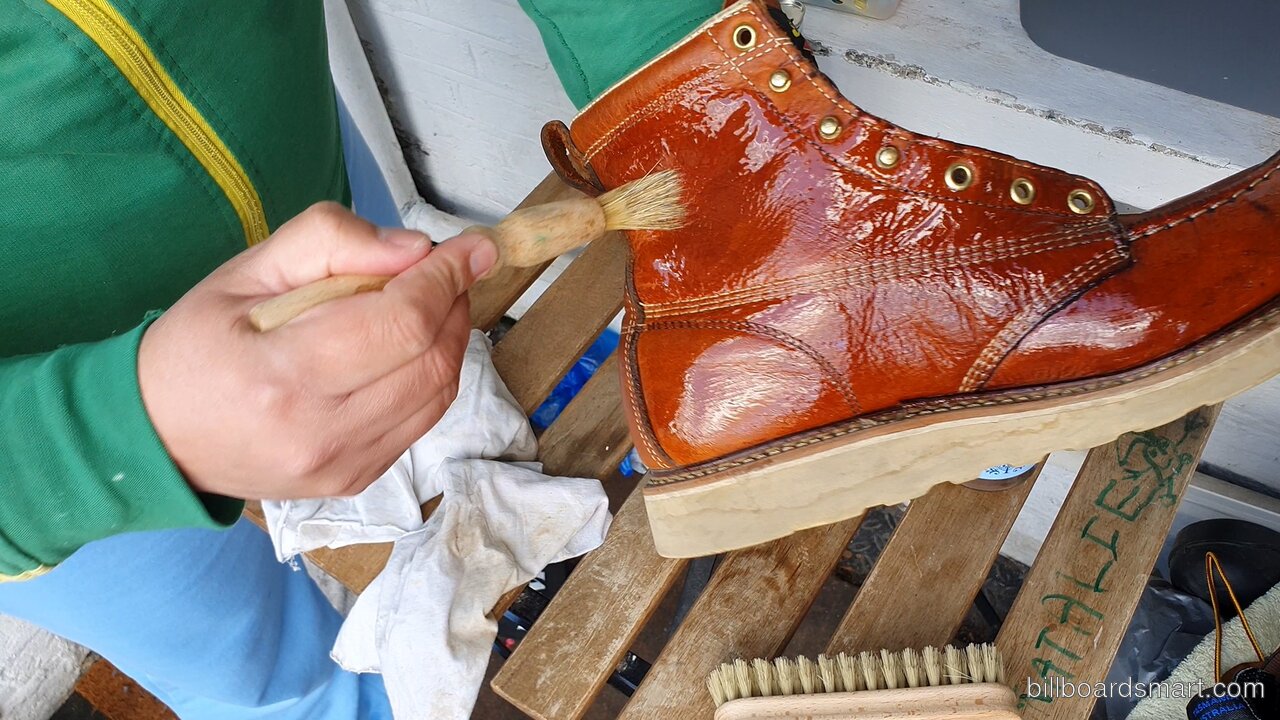
Heritage boots also ask more of their owner. Leather needs cleaning and conditioning now and then, and it will change colour and develop marks as you wear it. That patina is part of the appeal for most buyers. If you want boots that look the same in a year as they did on day one, a heritage leather boot will frustrate you.
Workwear and accessories. Wolverine also sells workwear clothing: jackets, pants, T-shirts, hoodies, and button-down shirts built for the same kind of buyer as its boots. The clothing is practical rather than fashionable, with an emphasis on tough fabrics and a comfortable fit for physical work. The brand also sells belts and bags made with the same durability-first approach. None of this is the reason most people come to Wolverine, but if you already trust the boots, the clothing and accessories are worth a look when you need a work jacket or a belt that will not wear out in a season.
The brand is the namesake of Wolverine World Wide, a footwear company whose portfolio has also included names such as Merrell, Saucony, Chaco, and Hush Puppies. That history explains why you sometimes see Wolverine technology and design ideas shared across related brands, and why the company has been able to keep both a work line and a heritage line going for so long.
How to choose the right pair
Start with the job the boots have to do. Ask yourself four questions before you look at any model. Do you need a safety toe, and if so, which type and rating does your workplace require? Will the boots get wet regularly? How many hours a day will you be on your feet, and on what kind of surface? And do you need a boot you can resole, or would you rather replace a cheaper pair more often? The answers narrow the range fast.
Then think about height and style. A six-inch boot is easier to move in and cooler in warm weather. An eight-inch boot gives more ankle support and keeps more mud and debris out. A pull-on boot is quick to get on and off, which suits people who are in and out of the house or the truck all day, but it fits less precisely than a lace-up. A low-cut work shoe suits warehouse and indoor work, but it will not protect your ankle on rough ground.
Check the sole. A lugged rubber sole grips mud and loose ground. A flatter wedge sole is comfortable on flat surfaces such as concrete and warehouse floors, and it is less likely to collect debris. Neither is better in every situation. Match the sole to the ground you actually walk on, not the ground in the product photo.
Finally, look at the construction. A Goodyear welted boot can be resoled, which is a real long-term saving if you wear boots every day. A cemented sole, where the sole is glued on, is common on lower-priced work boots and cannot be resoled in the same way. Both can be good boots. The welted one simply gives you a repair option that the glued one does not.
Getting a good deal on Wolverine
Wolverine boots are not cheap, and the price gap between the work range and the heritage range is large. That makes timing and comparison worth the effort. Here is how to shop them sensibly.
- Compare the same model across more than one retailer. Work boots are widely stocked, and the same boot can be listed at different prices, with different colour or size availability, from one store to the next.
- Look for previous-season colours and sizes. A boot in a less popular colour is the same boot, and it is often the first to be marked down.
- Check the returns policy before you buy online. Boot sizing varies between lines, and a heritage boot fits differently from a work boot. A free or cheap return takes the risk out of ordering the wrong size.
- Do not buy a safety-toe boot without confirming the rating. A deal is not a deal if the boots fail your site's safety check and you have to buy a second pair.
- Factor in care costs for heritage boots. Leather conditioner, a brush, and a resole every few years are part of the real cost of owning a welted boot.
- Be wary of listings that look far cheaper than every other seller. Counterfeit work boots exist, and a fake safety toe is worse than no safety toe at all. Buy from a retailer you recognise, and check that the branding, stitching, and labelling look right when the boots arrive.
A good Wolverine purchase is a boring one. The boots fit, they suit the work you actually do, and you forget about them because they are doing their job. If you buy the work range, judge them after a month of real wear, not after a day in the shop. If you buy the heritage range, judge them after a year, when the leather has softened and the first scuffs have settled into the patina. Either way, the brand's promise is the same as it was in Rockford in 1883: boots made to last, built for people who spend their days on their feet. The official site is wolverine.com, and it is the simplest place to check the current range and compare models side by side before you buy elsewhere.